Non-Invasive Fetal RHD Genotyping

Non-invasive foetal RHD genotyping from maternal plasma — clinical utility, workflow and reporting guidance.

Reliable from ≥10 weeks gestation; accuracy >99% with validated assays.

Workflow Diagram

Placenta → cffDNA in maternal plasma → extraction → PCR targets → interpretation
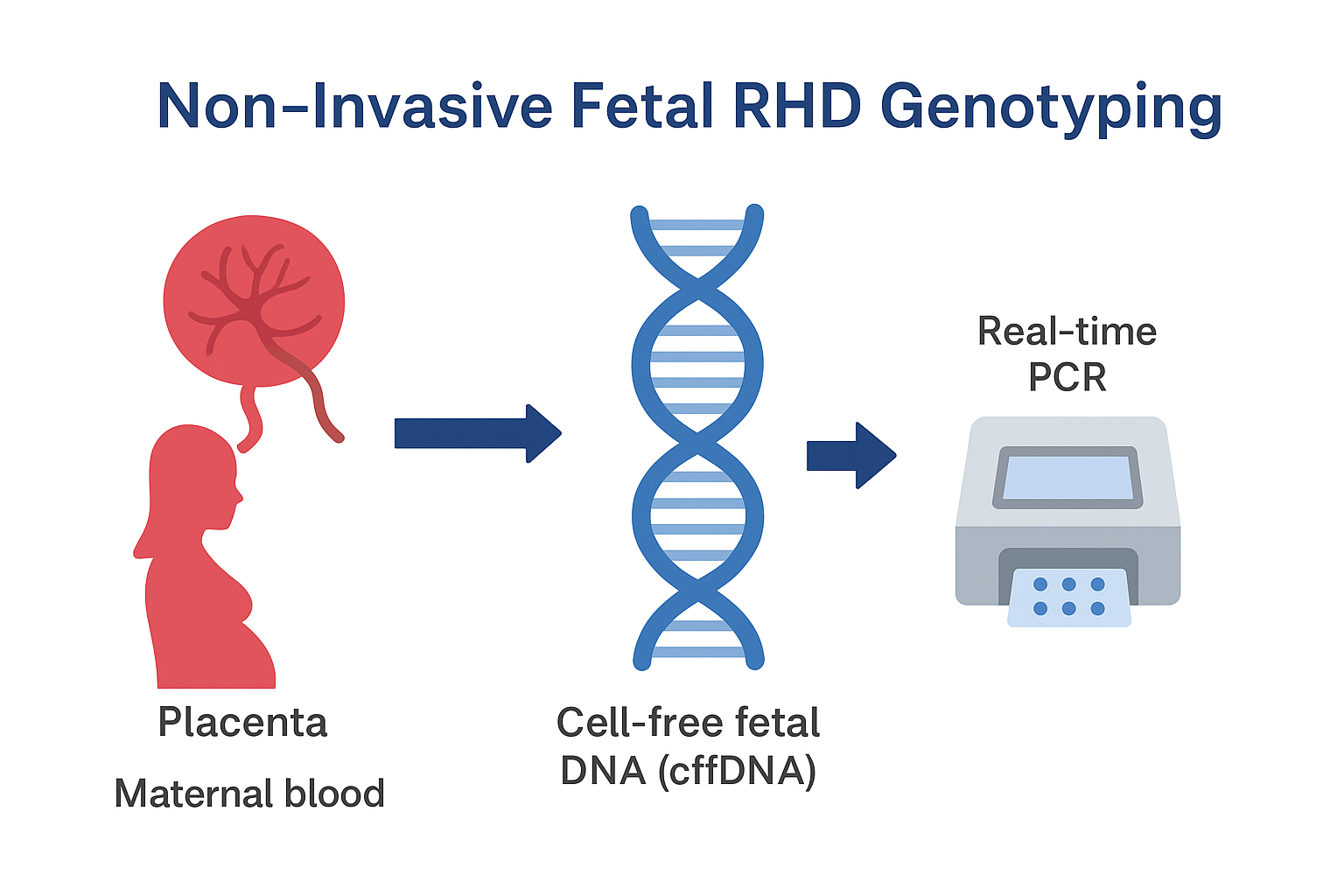
RHD workflow diagram

Quick facts

  • Sample: 10 mL maternal blood (Streck or G-Tube)
  • Minimum gestation: ≥ 10 weeks
  • Turnaround: 5–10 working days
  • Primary use: guide targeted anti-D prophylaxis

Test Workflow

Maternal blood collection
10 mL Streck/G-tube — label and ship promptly.
Plasma separation & cffDNA extraction
High-sensitivity extraction to recover low foetal fraction DNA.
PCR targeting RHD exons
Multiplex qPCR on several RHD regions (reduces false negatives).
Interpretation & report
Result: RHD detected / not detected / inconclusive.

Results & Interpretation

ResultMeaning
Foetal RHD detectedFetus predicted RhD-positive. Anti-D prophylaxis recommended.
Foetal RHD not detectedFoetus predicted RhD-negative. Anti-D may not be required.
InconclusiveLow foetal fraction or interference — repeat sample suggested.

Limitations

  • Low foetal fraction (very early gestation, high maternal BMI) can cause inconclusive results.
  • Rare RHD variants / hybrids may affect interpretation; additional testing may be required.